Showing posts with label Cinema. Show all posts

Tuesday, February 6, 2024

SUPER MARIO BROS: Robert Aaron Mitchell Appears on the Bratt's Bin Movie Podcast


This marks my second appearance on the Bratt's Bin movie podcast. This time Jared Bratt, Carl Diamond and myself discuss the much maligned 1993 video game movie Super Mario Bros.
Sunday, September 18, 2022

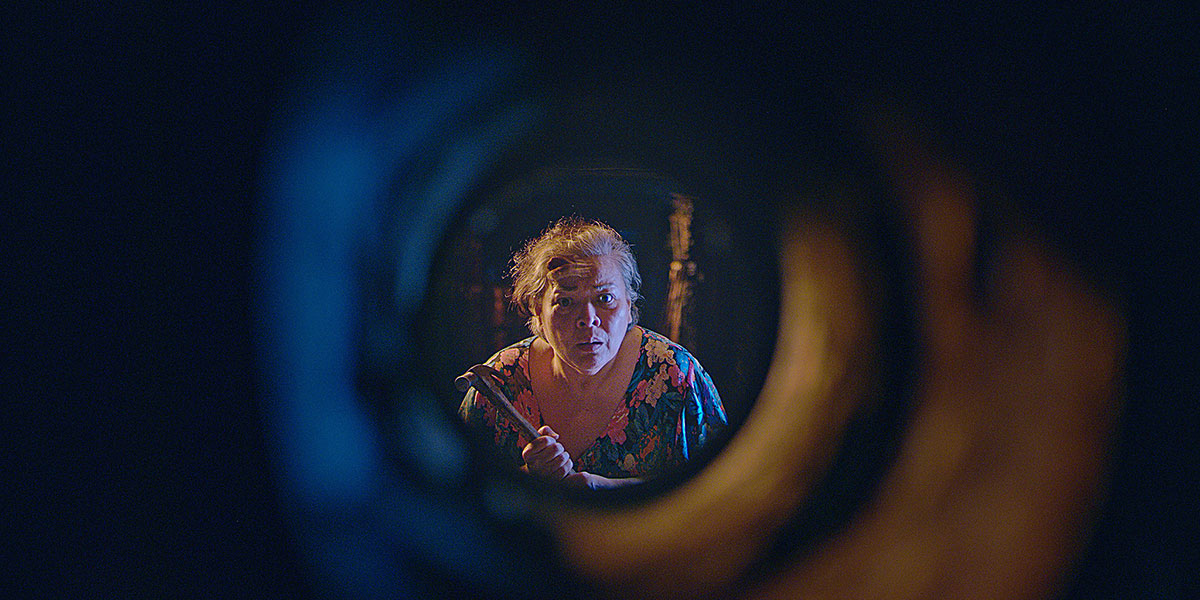
TIFF 2022 LEONOR WILL NEVER DIE Ang Pagbabalik ng Kwago: Mabuhay ang Sinehan!

 Leonor Will Never Die closed at the 2022 Midnight Madness program at the Toronto International Film Festival. It was a film I did not know anything about which is one of the great aspects of a film festival. You take a seat, the lights dim and go on an unexpected and unknown ride. And what a ride Leonor Will Never Die is. The film is written and directed by Martika Ramirez Escobar.

The title character is Leonor Reyes.  She was a successful screen writer. Shelia Francisco brings Leonor to life with great pathos and passion befitting an aging writer. The screenwriter's days are spent slipping in and out of reverie. She has a fondness for action movies and watches them as much as she can. She also forgets to pay the electricity bill. 

A freak accident sends Leonor to the hospital. The doctor explains her Leonor's condition to Leonor's son Rudie, "Rudie, you see, sometimes, we are awake, other times, asleep. But sometimes, you can be between both. That is called conscious sleep or hypnagogia. That's is the state your mother is now. Right now we don't know how to wake her up, or if she will wake at all. At least we're sure she's alive." Rudie, "How do we wake her up?" The Doctor responds, "You can't wake up someone who is not asleep." It is so with this story as well. A theme of the film is lines. The line between reality and fantasy, life and afterlife, sleep and awake.

The art form of cinema can really deliver on straddling the fictionalized "real world" of the movie and slide effortlessly into a fantasy world the characters of the film drift into. I have always gravitated to films that are movies within movies, mise en aybme. Anguish, Adaptadtion, Videodrome come to mind. This is something seen a lot in horror movies or drama. To see reality and fantasy blend so well in the context of action film was magnificent. Scenes that are exceptionally strong in Leonor Will Never Die are where the reality of the story run into the fantasy action film that Leonor is engaging with. The movie is also a love letter to Filipino action movies from years gone by.

I especially love the scenes of creating the screenplay for the movie within the movie. Ang Pagbabalik Ng Kwago. The Return of Kwago. Depicting writing in a movie is not an easy feat to pull off. Martika's imagination and innovation soar as the film revels in the act of writing A scene where Leonor is simultaneously typing and acting out what is she writing is a sheer joy.

Step back, this where another fight scene happens.

A film is created by a great many folks, I want to also acknowledge the editor Lawrence S. Ang. Pulling together a film that moves within it's own fantasy and reality takes a keen talent to succeed. The look of the reality and the action sequences created by cinematographer Carlos Mauricio are also wonderful.

There is something to be said or in this case, to be written about what the film watcher brings to watching a movie. I watched the film on what is my mother's first birthday after her passing in March. Watching this movie on this day, there was a lot that hit me a lot more as I engaged with the film. Leonor Will Never Die is a film that addresses grief. The movie celebrates the joy and healing in the act of artistic creation. It is also a testament to strong material. Good screenplays never age.Mabuhay ang Sinehan!

After watching Leonor you have to ask yourself why are we not seeing more grandmothers kicking ass in cinema. Ending a story can sometimes prove difficult. Getting a great ending though is uplifting. Leonor Will Never Die, what a great ending to Midnight Madness 2022.

. The screenwriter's days are spent slipping in and out of reverie. She has a fondness for action movies and watches them as much as she can. She also forgets to pay the electricity bill. 

A freak accident sends Leonor to the hospital. The doctor explains her Leonor's condition to Rudie, "Rudie, you see, sometimes, we are awake, other times, asleep. But sometimes, you can be between both. That is called conscious sleep or hypnagogia. That's is the state your mother is now. Right now we don't know how to wake her up, or if she will wake at all. At least we're sure she's alive." Rudie, "How do we wake her up?" The Doctor responds, "You can't wake up someone who is not asleep." It is so with this story as well. A theme of the film is lines. The line between reality and fantasy. Life and afterlife. Sleep and awake.

The art form of cinema can really deliver on straddling the fictionalized "real world" of the movie and slide effortlessly into a fantasy world the characters of the film drift into. I have always gravitated to films that are movies within movies, mise en aybme. Anguish, Adaptadtion, eXistenZ come to mind. Scenes that are exceptionally strong in Leonor Will Never Die are where the reality of the story run into the fantasy action film that Leonor is engaging with. The movie is also a love letter to Filipino action movies from years gone by.

I especially love the scenes of creating the screenplay for the movie within the movie. Ang Pagbabalik Ng Kwago. The Return of Kwago. Depicting writing in a movie is not an easy feat to pull off. Martika's imagination and innovation soar as the film revels in the act of writing A scene where Leonor is simultaneously typing and acting out what is she writing is a sheer joy.

Step back, this where another fight scene happens.

A film is created by a great many folks, I want to also acknowledge the editor Lawrence S. Ang. Pulling together a film that moves within it's own fantasy and reality takes a keen talent to succeed. The look of the reality and the action sequences created by cinematographer Carlos Mauricio are also wonderful.

There is something to be said or in this case, to be written about what the film watcher brings to watching a movie. I watched the film on what is my mother's first birthday after her passing in March. Watching this movie on this day, there was a lot that hit me a lot more as I engaged with the film. Leonor Will Never Die is a film that addresses grief. The movie celebrates the joy and healing in the act of artistic creation. It is also a testament to strong material. Good screenplays never age. Mabuhay ang Sinehan!

Ending a story can sometimes prove difficult. Getting a great ending though is uplifting. Leonor Will Never Die, what a great ending to Midnight Madness 2022.

Friday, October 22, 2021

I STILL SEARCH FOR YOU: A Cinematic Sketch by Robert Aaron Mitchell


I have been living in the middle of a cattle ranch in South Texas for a couple of months now. The area is very isolated and has amazing visuals. Everyday I have some sort of encounter with wildlife. Be it a snake chasing a frog I saw when out driving. A baby owl trapped near a cactus. The fleeting glimpse of a deer jumping over a barbed-wire fence. I wander the ranch in the hot Texas sun formulating ideas to create several short films. I decided to edit some of my cellphone footage I have been taking, to put together, what I'm calling a cinematic sketch. I used several filter and editing tools available at the app store to play around and manipulate the images. This is the result. 

I Still Search For You. A man walks in around a cattle ranch ranch in South Texas in a hallucinogenic state. 


Tuesday, August 11, 2020

SHINOBI NO MONO (1962) ONE OF THE GREAT NINJA FILMS


SHINOBI NO MONO (1962)

Directed by Satsuo YAMAMOTO

Starring Raizo ICHIKAWA

Before Sho Kosugi, before Michael Dudikoff donned Ninja hoods there was Raizo Ichikawa who was also known as the "Japanese James Dean". Raizo would act in over one hundred and fifty movies all for the Daiei motion picture company. In fact two years after Raizo's death in 1969 the Daiei studio would go bankrupt. Of all of his films it was the Shinobi series which would propel Raizo into super stardom.

Shinobi no Mono is set in the first year of the Tensho period (1573). The Tensho period would be marked by the the daimyo Oda Nobunaga the ruthless warlord whose burning ambition was to conquer all of Japan. Nobunaga was opposed by a coalition of other daiymo and Buddhist sects. It was in particular the Buddhist people that Oda was particularly fond of displaying his penchant for destruction. In 1571 (two years before Shinobi is set) Nobunaga destroyed a Tendai monastery and massacred all of the occupants of this holy ground. Historical context is needed to fully appreciate this film as it is very much rooted in history.

We begin the film by meeting Goemon (Raizo Ichikawa) a mid ranking ninja of the Momochi clan. He is a young man with endless ambition who one day wishes to assume the head of the clan. He and the other ninja are summoned to a meeting led by Momochi (Yunosuke Ito). During this meeting we learn the origins of ninja. The art of Ninjutsu was created by En-no-ozunu during the reign of Emperor Tenchi. Ninjutsu was then spread to various monks to extend and protect Buddhism. The very religion that Nobunaga is so bent on destroying. The Momochi clan has vowed to work for daimyo opposed to Nobunaga as mercenaries.

Along side this political context lies personal dynamics. Ninjas for all their special abilities are after all only human and it seems personal rivalries are amongst one of the many problems of a ninja clan. Goemon and fellow ninja Yohachi vie for top spot in the Momochi clan. The Momochi ninja clan and the Nagata ninja clan are rivals. Kizaru (Goemon's counterpart in the Nagata clan) vie against other ninjas for the honor of top ninja.  Goemon gives into his carnal needs and begins to have an affair with Momochi's wife Ino-ne who is very much neglected by Momochi. If this sounds very much like a soap opera it is because it is and takes up the first act of Shinobi.

A scene that really shines for me is when Ino-ne is fraught with paranoia that Momochi is watching her and Goemon. It is here we see the power of the ninja. Using deception, secrecy and stealth the ninja can confuse and get into the mind of an opponent. To give away anymore of the plot would be to ruin the film.

I must confess I have always been intrigued by Ninjas since I was a small boy so I will always have a soft spot for films featuring Ninjas. I recommend Shinobi no Mono to aficionados of ninjas but more importantly to Japanese cinephiles. Shinobi no Mono is a film very much steeped in Japanese history. The "action" scenes of the ninjas are very much a standout for me. We see the ninja use all the skills of their trade, shurikens, smoke, dexterity etc etc. One final note the cinematography of Takemura Yasukazu is absolutely exquisite.

Sunday, December 8, 2019

[REVIEW] QUENTIN TARANTINO The Iconic Filmmaker And His Work by Ian Nathan


As the old adage goes, "One should not judge a book by it's cover" that went out the window when Ian Nathan's book on Quentin Tarantino arrived at my office. The book takes it's color scheme and font from Tarantino's Kill Bill complete with the image of Japanese steel from Okinawa. As if that wasn't stylish and striking enough the book also has a slip case. These stylistic choices are fitting for a book about one of the most stylistic directors to call out "action!" working today.

"I didn't go to film school, I went to films." - Quentin Tarantino

Anyone who has ever watched an interview with Tarantino can attest to, he talks in rapid fire encyclopedic cinema references with a lot of ego and is extremely quotable. Nathan's book excels at peppering the book with quotes. The above quote is the first sentences you read in the book and are located in the contents page. There are ten quotes in the contents page for the ten sections of the book and this cannot be a happenstance structure as it has long been mythologized that Quentin will craft ten films and retire from film making.

Speaking of mythology the first section in the book entitled Video Archives gets into the talking points about the Tarantino's beginnings. Nathan asks "Why is Quentin Quentin?" he then takes us on the journey from Tarantino's earliest years in Knoxville, Tennessee and the talk of his grandfather being a bootlegger to his growing up in the neighborhood of Torrance south of Los Angeles. As well as Tarantino's first jobs at the Pussycat Theater to Video Archives. The first chapter also details some of Tarantino's many cinematic and television influences.

Another standout chapter begins with another quote "I think of them as like old girlfriends..." and chronicles Natural Born Killers, True Romance, From Dusk Till Dawn. The trio of films that were written by Quentin. This trifecta of screenplays were originally written to be his first feature length effort film (My Best Friend's Birthday not withstanding and subsequently buried in the mythology surrounding Tarantino) Killers, Romance and Dusk help to cement Tarantino's place in early 1990s film and pop culture.

Ian Nathan's book is a glossy sprint through the films and influences of Quentin Tarantino. Film being a visual language Nathan and Tarantino's words are complimented with a beautiful collection of photographs from the Kobal archives throughout the book. Myself being married to an academic something else I very much appreciated is the fact that the many Tarantino quotes are backed by four pages of sources.

With Once Upon A Time In Hollywood arriving on home video as I write this Ian Nathan's book on Quentin Tarantino is a great look back for those of us who have fond memories of discovering Reservoir Dogs on VHS and have been anticipating new Tarantino films ever since. Quentin Tarantino The Iconic Filmmaker And His Work is also a great companion piece for film lovers who have discovered the films of Tarantino in the subsequent years.

You can buy Ian Nathan's book here.  


Thursday, October 11, 2012

Harris Savides 1957 - 2012


"It's always in the service of keeping it natural and simple and not over-glamorizing it, not letting the photography stand forth too much. That's all it's about, I think, for me: what looks real. I think there's a certain artifice with the polished look. That works sometimes. It works a lot of the time. I certainly enjoy seeing movies that look photographically beautiful. But I think the natural approach somehow gives weight where it needs to be and things don't look overly contrived." Harris Savides


Monday, October 1, 2012

Caroline Williams Talks About Acting, Dennis Hopper and Horror Films

It was an honor to meet and talk with the actress Caroline Williams.(Texas Chainsaw Massacre 2, Days of Thunder, Halloween 2) Caroline is very engaging, has an impeccable sense of humor, a great story teller and very much a talented actress.

Monday, May 7, 2012

Goodbye Cumberland Cinema

Last night the Cumberland Cinema located in Yorkville in Toronto went dark. One of the first memories that comes mind was standing in line there during the Toronto International Film Festival and buying a copy of the documentary Loose Change of some dude -- which I think is the perfect way to buy a conspiracy documentary, off of some guy hocking blank DVDs with the title Loose Change written on the silver disc with a sharpie -- and than buying Sushi off the cart the Cumberland would wheel outside during TIFF. There was also that great walk down the alleyway from Bloor street and the movie posters hanging above as you walked towards the theater. Here are some photos I took of the theater in the Summer of 2008.

Tuesday, April 24, 2012

Double Exposure (1983) A Classic Portrait In Terror!


I love trashy cinema. Films that played at some run down second run theater for a night or maybe a week, a movie whose last stop on the circuit was a drive-in in Indiana. Movies that you cannot find a poster for while searching through images, a cast that may not have any imdb credits. Films with titles that are often preceded by aka.

We live in a world where all information is readily available everywhere and anywhere, we are always connected or so we believe. Recently I drove through the Great Smoky Mountains in East Tennessee and was thrilled to look at my cellular phone and see no signal. It is rare I find myself not connected to the web and that rare feeling of not being connected extends to these "trashy", "drive-in" or the now post Tarantino, Rodriguez everything that was low budget, cheesy, or any kind of genre movie now becomes a "grindhouse" film. Movies that no respectable connoisseur of cinema would ever embrace, the kind of  movies that drift through bargain bin to bargain bin, one small film company to another distribution company, movies that wind up in a pawn shop or a thrift store with several price tags on the box. Which brings me to Lexington, Kentucky.

I was recently in a Half-Priced books in Lexington and came across the Mill Creek Entertainment 32 Drive-In Cult Classic Movie Collection for a price that would average around fifty cents per film. A small price to pay for cinematic lost treasure. As I watched the first film according to the back of the DVD box was entitled Blue Monday (1972) -- which once I put the DVD in -- I learned that the film was actually called Blue Money about a pornographer who is just trying to get by in a cruel business, it struck me that I should write a few things about these films. Why not? I'm not adverse to write about movies. It's just in this Internet information overload age who really gives a fuck what I write about films.

So here it begins, a few thoughts about a film called Double Exposure (1983) -- at least according to the good folks at Mill Creek Entertainment. Also according to those magical all seeing and all knowing gurus at imdb this film fuses together not one, not two but four genres. Comedy, Crime, Drama and Horror. I dimmed the lights and poured a glass of O.J. and prepared for the journey that lie ahead. It begins with a credit sequence that is so outstandingly annoying, so much so that I thought that perhaps the orange juice I was drinking was spiked with some hallucinogenic drug and that the trails I were seeing were not in fact the movie but were my own vision. For a film about a photographer and images I thought this was brilliant. Fuck up the audience early and keep those fuckers unbalanced.


When the Director of Photography credit came across the screen with a shot by the camera operator unable to keep up with an overhead shot of a sports car I knew this film had already endeared itself to me. The film centers around a photographer Adrian Wilde played by Michael Callan who has problems. So much so that when we meet Adrian he is on the couch in his shrink's office. "Every time I'm turned on and the chicks aren't and when they're turned on, I freeze. Every time I think I'm getting better I slide back." and that's just artistically, what about the dreams? "What dreams? The bizarre, crazy dreams."

Adrian may indeed have problems but picking up chicks ain't one of them. He is one smooth-talker... the title may be Double Exposure but the dialogue is pure double-entendre. Watching this film I thought to myself that watching a person go absolutely bat-shit crazy to the point that they may indeed be a serial killer is by a far a great cinematic device. Which makes me pose the query, "What makes good cinema?" Well according to Bill Yates an associate professor at Saint Joseph's college in Maine good cinema can be thought of as such, "If you can engage a person ... then it's great film." Which brings me back to Adrian our hapless photographer suffering from dreams that may or not be real and this movie Double Exposure, which is a compelling, engaging narrative and for my money becomes pure cinema.


As the film unfolds and the ominous music swells our photographer's grasp on sanity and reality begins to slip. What follows is a pretty decent thriller. I really enjoy films that play with the reality of the movie and folds into itself like an accordion. Director William Byron Hillman and Editor Lawrence Bridges do an admirable job playing with the dream and reality of the narrative.

Ultimately Double Exposure is a low rent Hitchockian, Depalma thriller that falls way short of the mark, but of course it falls short of the mark. Hell that's why I watched it in the first place. But where Exposure fails it also succeeds is a film with just enough sleaze, violence and nudity to ensure that in the early eighties it would be seen in a theater, than later the burgeoning home video market and eventually wind up on late night television. If the user ratings on all unknowing one-eyed seer of imdb garner any insight into the matter, you will either love this movie or hate it.


Wednesday, December 15, 2010

An Introduction


Writing about yourself is quite an art form in and of itself. It borders on the narcissistic and conjures up images of the guy nursing a cocktail at the party that is desperately vying for attention.  However I believe a few words are in order.

My name is Robert Mitchell and I am based out of Toronto, Canada. I have tried to fit what I do unto a business card usually with not much luck. I'm a videographer, an interviewer, a writer, on and on. However during the Toronto International Film Festival in 2009, I had the honor to capture the Bad Lieutenant: Port of Call New Orleans Q&A for Colin Geddes with Werner Herzog. This is where I first heard the term, soldier of cinema. Suffice to say I thought it was an amazing phrase. I'm not the only one, I hear the phrase mentioned at festivals, during any kind of cinematic adventure, like the recent 16mm print rescue from the Toronto Reference Library etc.

A lot of what I do and deem important does not involve me making much if any money. Comes at a great personal sacrifice and relies on great passion and determination. Hence, the reason I have co-opted the term soldier of cinema and the reason why this blog is so named.

What is the blog? Good question. The idea first arrived to me when I uploaded a recent interview I did with the actor William Forsythe. One of my personal favorites - as it involved us talking about the great Sergio Leone. I loved the interview but the sound was horrible. The crowd from the convention center drowned out our conversation and the video looked like a happy actor reminiscing and an excited yet tired interviewer going through a pantomime. I then thought all is not lost I can transcribe it and still find a place for this interview. The question then became, where? I have a website but know nothing about design and code and have not the money or time to make this a priority. Long story short, it has not been updated in quite some time. This lead to the creation of this blog.

At the moment, like most things in my life, there is no road map, no grand scheme so what will show up here is as much your guess as it is mine. I can however say with a great degree of certainty that you will see an interview with William Forsythe in the not so distant future.

Here it is, just what the world needs, another blog. I take my leave, as I have to look in the mirror and freshen up my drink.